
When my youngest turned two, I had 25 people crammed into our lounge room for what I thought would be a magical party. He lasted forty minutes before melting down and refusing to leave my arms. The balloons scared him. The noise was too much. I spent the rest of the afternoon managing guests while he napped on me. That party taught me more about age-appropriate birthday planning than anything I’ve read since.
Jump to
TL;DR
- Toddlers (1-3): Keep it small, short, and low-key. 60-90 minutes max. Close family only. They won’t remember it, and that’s fine.
- Primary school (4-10): This is the golden age for themed parties. Match the theme to their current obsession. Budget around AU$150-300 (approx. USD$95-190) for a home party.
- Tweens (10-13): Shift from big themed parties to activity-based celebrations. A sleepover or a specific outing with 4-6 close friends beats a large bash.
- Teens (13-18): Ask them what they want. Many prefer an experience or a dinner out with a few friends over a formal party.
- The average kids’ birthday party in Australia costs around AU$250 for a home celebration, according to Yellow Pages Australia (2024).
Before You Start: What Actually Matters at Every Age
One principle cuts across all four age stages: the party should match your child’s personality and developmental stage, not a social media trend or what the neighbours spent last month. According to PBS KIDS for Parents’ age-by-age birthday party guide, children at different ages have very different social and emotional capacities. What works for a seven-year-old can overwhelm a toddler or bore a fifteen-year-old.
A birthday party is a structured social celebration built around a child’s developmental stage and social readiness, not just their age in years. Parallel play is the stage where children play near each other without interacting, which means toddlers aren’t developmentally ready for traditional party games. The guidelines below are starting points. Your child’s individual temperament matters just as much as the age bracket.
Toddlers (Ages 1-3): Short, Simple, and Sensory
The first truth about toddler birthday parties: the party is really for the adults. That sounds blunt, but it’s accurate. PBS KIDS for Parents is clear about this: a one-year-old has no comprehension of what a birthday party is, and a two-year-old is still in parallel play mode, meaning they play alongside other children rather than with them. My toddler party disaster came from ignoring exactly that.
What works at this age:
- 60-90 minutes maximum. Any longer and you’re courting a meltdown.
- Sensory stations: a tray of kinetic sand, a water table, or simple playdough with cookie cutters
- Bubbles and freeze dancing. Toddler-proof entertainment that costs almost nothing.
- A cake smash for first birthdays (set up a safe spot, use a small smash cake separate from the main cake)
- Guest list capped at around 8-10 adults and a small handful of toddler-aged children
PBS KIDS for Parents also advises against opening gifts during toddler parties. Other young children don’t understand why they can’t keep the toys, and it ends in tears more often than not. Open gifts later, when everyone’s gone home.
Cost: A toddler birthday at home can come in under AU$100 / USD$65. A homemade cake runs around AU$20-30 in ingredients; a store-bought option AU$35-60. Skip professional entertainment at this age. It usually overwhelms more than it entertains.
Primary School Age (4-10): The Golden Years for Themed Parties
This is the sweet spot. School-age kids understand what a birthday party is, they have genuine friendships, and they’re old enough to engage with games, themes, and structured activities. The American Academy of Pediatrics (via HealthyChildren.org) notes that peer relationships become central to children’s lives from around age six. The guest list starts to matter to your child in a way it didn’t before.
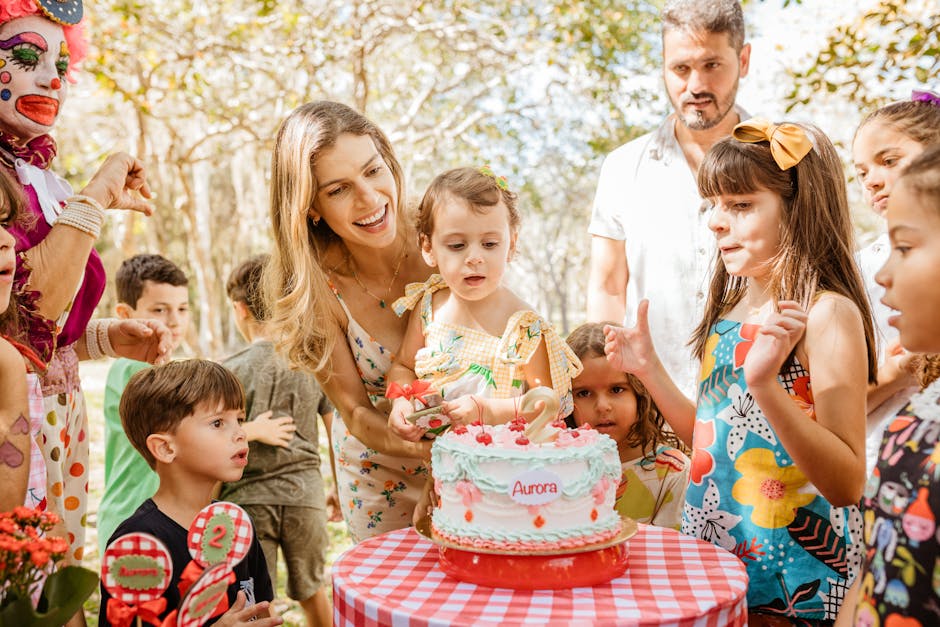
What works at this age:
- Themed parties: Pick whatever your child is obsessed with right now. Dinosaurs, Minecraft, a favourite movie character, space. The theme does the decorating work for you and gives you an obvious activity direction.
- Games with rules: Treasure hunts, musical chairs, pass the parcel, and obstacle courses all land well from age five onwards.
- Venue options: Trampoline parks, indoor play centres, bowling alleys. These run AU$200-500 / USD$125-315 for a party package including food.
- Home backyard parties: More popular than you’d think, and a lot cheaper. A paddling pool and a sprinkler in summer plus a cake is enough at age six.
- Craft activities: Kids this age love making something to take home. Decorating a plain tote bag with fabric markers costs AU$3-5 per child.
A useful rule of thumb I was given when my eldest started school: invite as many children as your child’s current age. Six kids at age six, eight at age eight. It’s not a rigid rule, but it keeps things manageable and ensures every guest gets real attention from the birthday kid. I once planned six separate “stations” for my daughter’s sixth birthday and the kids abandoned all of them within ten minutes to run around the garden together. Two or three activities plus food is enough.
For more ideas on themed parties and venues across this age range, the birthday party ideas for kids guide covers dozens of options by theme and activity type.
Cost: A home party for primary school age runs AU$150-300 / USD$95-190, covering food, cake, decorations, and simple prizes. A venue party adds AU$100-300 / USD$65-190 on top.
Tweens (Ages 10-13): Smaller, Friend-Focused, Activity-Driven
The transition out of “little kid parties” is gradual, and uncomfortable if you try to force it. My middle child, at eleven, told me she did not want a themed party “like a baby.” What she wanted was five friends for a sleepover, two movies, and face masks at midnight. That party cost around AU$120 / USD$75 all up. It’s the one she still talks about most.
At this stage, kids are beginning to define their own social world. They care less about activities organised by adults and more about time with their specific group of friends. Eventifai’s age-by-age birthday planning guide notes that pre-teens often prefer smaller parties with close friends, or activity-based celebrations, over large themed events.
What works at this age:
- Sleepovers or “sleepunders”: A “sleepunder” is where kids come for the fun but go home before actual bedtime. Useful if you’re not a sleepover family, or if anyone has early morning commitments the next day.
- Activity outings: Bowling, laser tag, escape rooms, or axe throwing for older tweens. Budget AU$120-200 / USD$75-125 for a group of four to six.
- Creative home parties: Spa night with face masks and nail polish, movie marathon in a blanket fort, karaoke, or a cooking night where they make their own dinner together.
- DIY craft parties: Tie-dye, custom pillowcase decorating, a foil fashion design competition. Low-cost and popular with this age group.
Guest count matters more at this age than it did at primary school. A group of 4-6 close friends produces far better memories than 15 semi-acquaintances. Tweens are socially aware enough to notice if someone doesn’t fit in, and large groups make that more likely.
The one thing to avoid: imposing a “little kid” theme on a ten or eleven-year-old without asking first. They have clear opinions about what feels right for their age.
Teens (Ages 13-18): Experiences Over Everything
Teens are the most variable age group to plan for, and the most likely to tell you what they want if you ask. The consistent pattern in teen birthday planning is that experiences beat stuff. As FaveMom’s teen birthday adventures guide puts it, teens often have too many things already and are getting to the point where they can buy what they want themselves. What they can’t arrange alone is a memorable shared experience.
What works at this age:
- Experience activities: Concert tickets, a cooking class for the group, pottery workshop, escape room, go-karting, or paintball. These cost AU$60-200 / USD$40-125 per person depending on the activity.
- A dinner out: Let them choose the restaurant and bring their three closest friends. One of the most popular teen birthday formats, and low-effort to organise.
- Low-key home night: Private cinema setup in the lounge, custom pizza orders, and a film series they’ve been wanting to watch. Total cost: AU$50-80 / USD$30-50.
- Overnight hotel stay: For older teens (16+), booking a hotel room for a night with friends is a big deal that doesn’t need a massive budget. Mid-range hotels run AU$100-200 / USD$65-125 per night.
Keep the guest list small unless your teen asks for something bigger. Many teens find large social events stressful at a time when social dynamics are complicated. For teens turning sixteen who want a more structured celebration, the sweet 16 party planning guide covers venue options, guest list management, and budget breakdowns.
My practical approach now that my eldest is fifteen: I ask her in September what she wants to do for her January birthday. She always has a specific idea. Last year it was a pottery class followed by lunch, her and two friends. Cost us AU$180 / USD$115 all up. She still has the bowl on her windowsill.
Three Mistakes I Made Before I Got This Right
In twelve years of birthday parties across three kids, I’ve made most of the common errors at least once.
Budget creep is the real problem. A survey reported by The Bump (2024) found the US average birthday party costs around USD$300, with 20% of parents spending over USD$500. Yellow Pages Australia puts the typical home party at around AU$250. Neither figure includes the stress of trying to match what other families are doing. Set a number before you look at a single decoration. Once you’ve opened Pinterest, you’ve already lost the budget battle.
Party length matters more than the activity list. Toddlers need 60-90 minutes. Primary school kids manage two hours. Tweens and teens can go longer if engaged, but even older kids hit a wall around three hours at a home event. More activities don’t extend a party well. They create more tired children and more stress.
Your child’s personality overrides every age guideline. I have one extrovert who wanted 20 kids at her parties from age four, and one introvert who was happiest with four friends and a movie from age ten. The breakdowns in this guide are useful starting points. They are not instructions.
Frequently Asked Questions
What do you do for a toddler’s birthday party?
For a toddler’s birthday (ages 1-3), keep the celebration short, small, and sensory-focused. The best toddler birthday parties run 60-90 minutes, happen at home or a familiar space, and involve close family plus a small number of young guests. Activities that work well include sensory bins with kinetic sand or playdough, bubbles, and freeze dancing. PBS KIDS for Parents advises against opening gifts at toddler parties, since other young children don’t understand why they can’t keep the toys. Budget around AU$50-100 (approx. USD$30-65) for a simple home celebration. Professional entertainment is not necessary and often overwhelming at this age.
What age is best for a birthday party with school friends?
Most children are ready for a school-friend birthday party from around age four, once they have started preschool or kindergarten and established genuine friendships. The American Academy of Pediatrics notes that peer relationships become central from age six onwards, making the six-to-ten window the most socially meaningful time for school-friend parties. Before age four, children are still in parallel play mode. From age four to ten, themed parties with organised games like treasure hunts and craft activities give children a structured, enjoyable shared experience.
How much should I spend on my child’s birthday party?
How much you spend depends on your family budget and your child’s preferences, not what other parents are doing. According to Yellow Pages Australia (2024), the average home birthday party in Australia costs around AU$250 (approximately USD$160). A survey reported by The Bump (2024) found the US average sits around USD$300, with 20% of parents spending over USD$500. You can run a successful home party for AU$100-150 / USD$65-95 with a homemade cake, simple decorations, and a few DIY games. Set a firm budget before you start planning.
How do I plan a tween birthday party for ages 10-13?
The key with tweens is to move away from adult-organised themed parties and toward activities they have chosen with a small group of close friends. Ask your tween directly: do they want a sleepover, an outing, or a low-key night in? Popular options include sleepovers with a movie marathon or spa night, activity outings like bowling or laser tag, and creative parties like a cooking night or tie-dye session. Keep the guest list to 4-6 close friends. Budget: AU$80-200 / USD$50-125 covers most tween celebrations.
What do teenagers want for their birthday?
Most teenagers prefer experiences over gifts and formal parties. Common preferences include dinner at a restaurant of their choice, a concert or live event, an activity experience like an escape room or cooking class, or a low-key evening at home with their closest friends. Involve your teen in planning well in advance. If your teen is turning sixteen and wants a more structured celebration, the sweet 16 party planning guide covers venue options, guest list management, and budget breakdowns.
The biggest shift in how I think about birthday planning came when I stopped asking “what kind of party should I throw?” and started asking “what does this specific child want right now?” Sometimes that’s a big noisy party. Sometimes it’s dinner out with three friends. Start with the child, not the theme.