
My daughter turned 16 last year, and I’ll be honest: I underestimated it. I thought, how different can it be from a 13th? Turns out, quite a lot. She had opinions about everything, the guest list alone took two weeks to negotiate, and the budget crept up faster than I expected. We got there, it was brilliant, and she still talks about it. But I wish I’d started with a proper plan instead of winging it and catching up. This guide is what I needed back then: every decision in the right order, from locking in a budget to the small touches that make a party stick in everyone’s memory.
Jump to
TL;DR
Give yourself 6 to 12 weeks. Lock in three things first: a real budget, a rough headcount, and a theme. Everything else follows from those. Costs range from around AU$500 (~US$320) for a backyard party to AU$5,000 (~US$3,200) for a big hired-venue night with a DJ and catering. I’ve covered every stage below: budget, theme, venue, food, cake, entertainment, invitations, decorations, and gifts, plus the questions I get asked most at the end.
What Is a Sweet 16 Birthday Party?
If you’re new to all this: a Sweet 16 is a milestone birthday party for a teenager turning 16. The tradition came over from North America, where it grew through the 1950s and 1960s into its own cultural moment. Before that, it drew loose inspiration from the Latin American quinceañera, which marks a girl’s 15th birthday as a coming-of-age celebration rooted in Catholic ceremony and specific cultural symbolism. A Sweet 16 carries similar emotional weight in a Western context but has no fixed religious structure. It’s just a big birthday, done deliberately.
What it actually looks like depends entirely on the teenager. My neighbour did a low-key dinner for eight close friends at a restaurant. Another mum I know hired a function centre, brought in a DJ, and had 90 guests in formal attire. Both were Sweet 16s. Both worked. The scale doesn’t define it. What defines it is that it feels intentional: planned for this person, not just assembled from a party checklist.
One thing worth knowing before you start: a quinceañera and a Sweet 16 are not interchangeable. If your family has Latin American heritage and is considering a quinceañera for a 15th birthday, that involves specific religious and cultural ceremony. A Sweet 16 is a secular celebration. Different traditions, different planning requirements.
Step 1: Set Your Budget Before You Book Anything
Nail the budget before you even open a browser. I’ve watched families spend weeks falling in love with a venue they can’t actually afford, then having to start again with everyone stressed and the timeline shortened. Lock in a number first, and stick to it.
A backyard party for 20 to 30 guests can cost AU$400 to $800 (~US$255 to $510) when you handle food and decorations yourself. A hired venue with a DJ, catering, and professional decorations for 80 to 100 guests typically runs AU$3,000 to $6,000 (~US$1,920 to $3,840) in Australia. Mid-range parties in the AU$1,000 to $2,500 (~US$640 to $1,600) range usually involve a community hall or restaurant private room with a self-catered or semi-catered spread.
Budget breakdown by category (approximate, 50-guest party):
| Category | Budget Share | Estimated Cost (AUD) | USD Estimate |
|---|---|---|---|
| Venue hire | 30-40% | AU$600-$1,200 | ~US$385-$770 |
| Catering / food | 25-35% | AU$500-$900 | ~US$320-$575 |
| Decorations | 10-15% | AU$200-$400 | ~US$130-$255 |
| Cake | 5-10% | AU$150-$300 | ~US$95-$190 |
| Entertainment (DJ / photo booth) | 10-15% | AU$300-$600 | ~US$190-$385 |
| Invitations and stationery | 2-5% | AU$50-$150 | ~US$32-$95 |
| Outfits (birthday person) | 5-8% | AU$100-$250 | ~US$64-$160 |
Put 70% of your money toward venue and food. Those are the two things guests actually notice, and they’re the hardest to cut at the last minute. Get creative with decorations and stationery using DIY. I’ve seen families pull off a stunning 50-guest celebration on AU$2,500 (~US$1,600) that felt more special than events costing three times that, simply because they spent where it counted.
Thumbtack’s 2023 event cost data shows the average US Sweet 16 costs between $500 and $1,500 for modest celebrations, rising to $5,000 to $10,000 for large formal events. Australian costs tend to run roughly 10 to 15% lower for comparable formats due to different venue pricing structures.
Step 2: Choose a Theme That Fits the Birthday Person
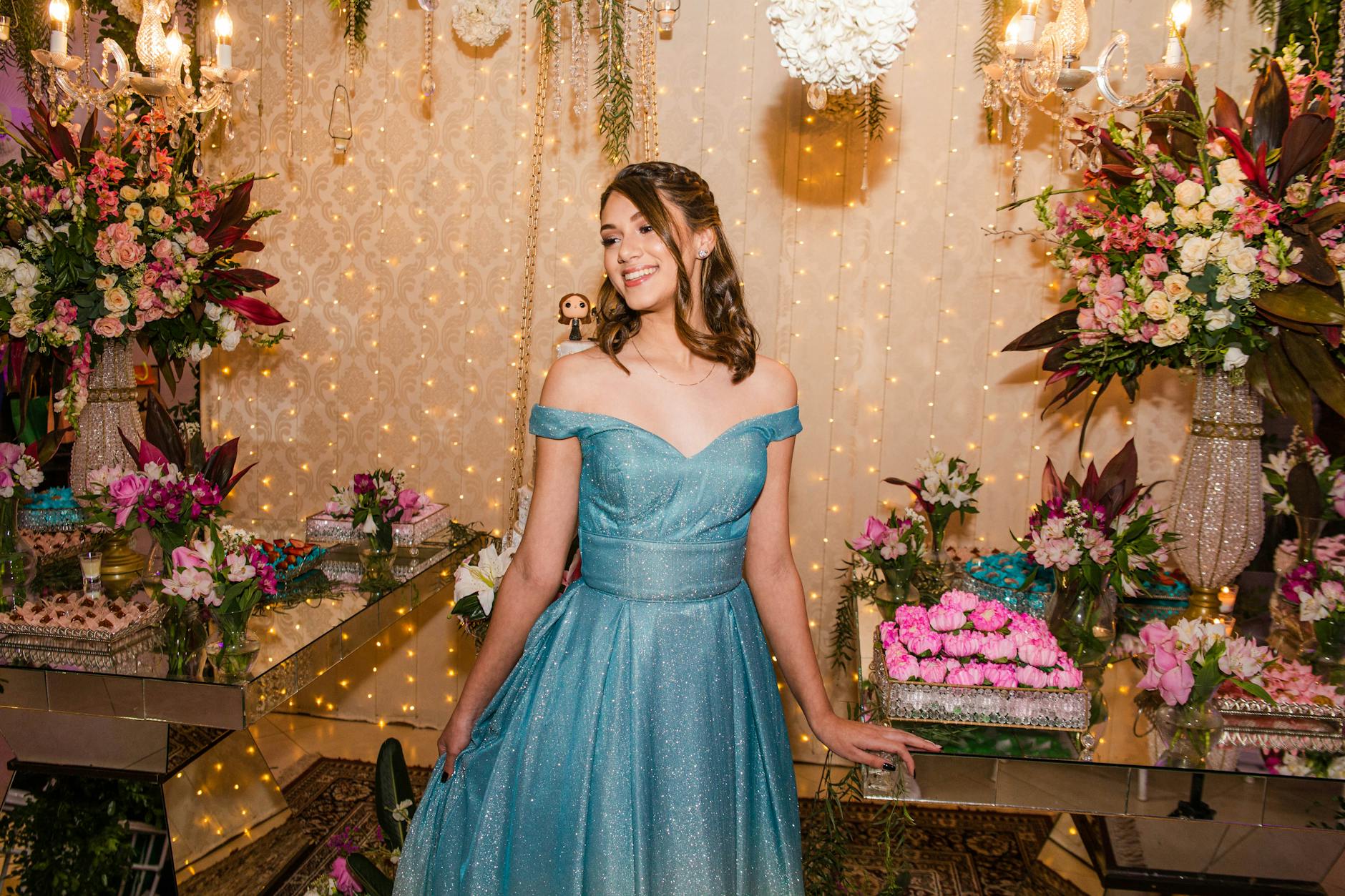
Pick the theme early. It drives every visual and logistical decision that comes after: decoration choices, guest dress code, food styling, how the venue needs to be set up. One question narrows the field fast: does she want something glamorous and formal, or relaxed and personal? Start there.
Popular themes for 2024 to 2025 include:
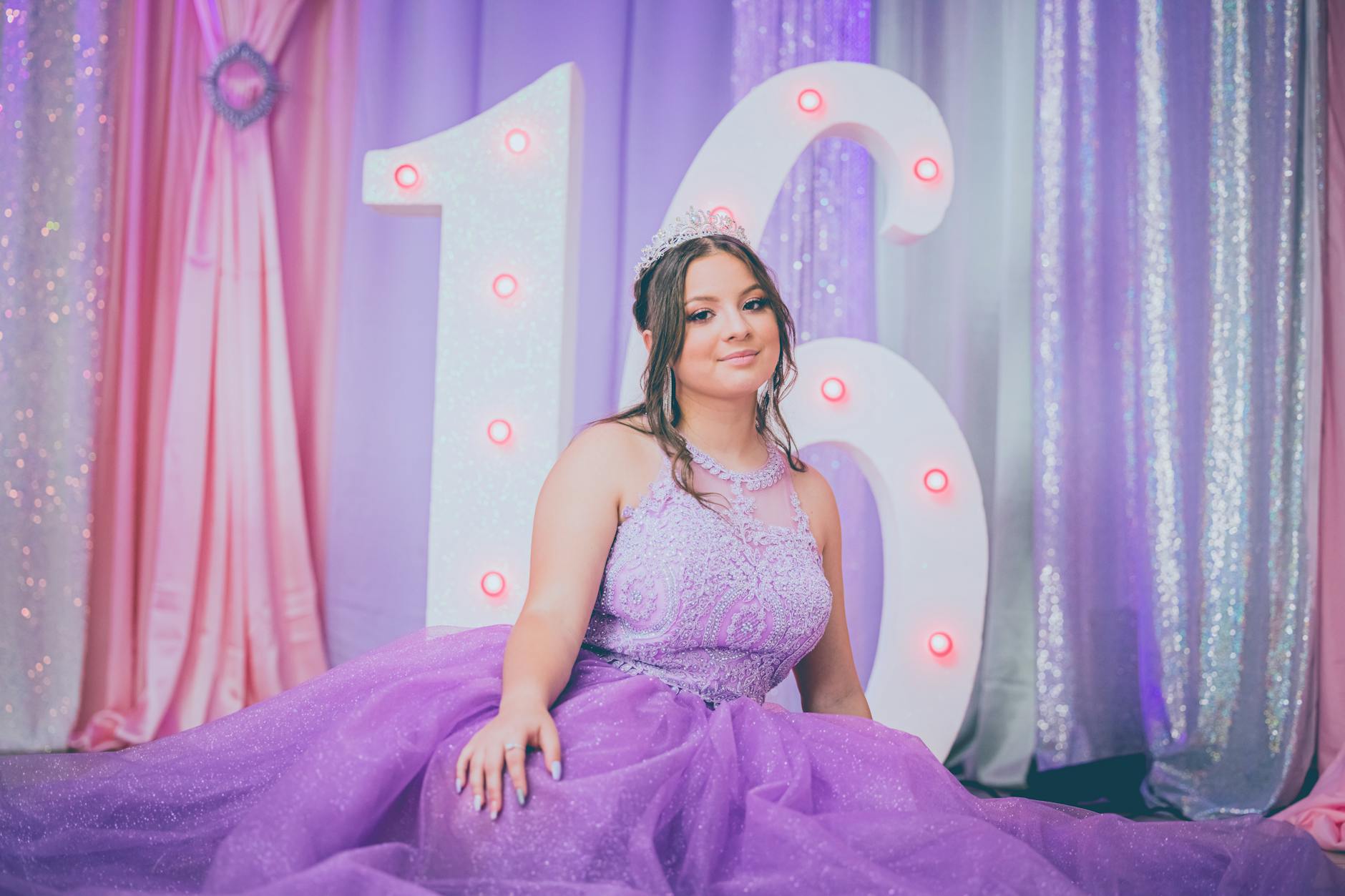
Glam / Hollywood Royale. Red carpet entrance, black and gold palette, sequin table runners, and a Hollywood-star photo wall. Works best in a hired venue with good lighting. Guests dress semi-formal.
Boho Chic. Earthy tones, macrame, dried pampas grass, string lights, and mismatched vintage crockery. Photographs beautifully and works at home, in a garden, or in a rustic barn venue. Guests dress in boho-casual.
Paris / European Elegance. Eiffel Tower props, French macarons, black and cream colour palette, fashion magazine aesthetics. Pairs naturally with afternoon tea-style food service.
Tropical / Flamingo. Bright pinks and oranges, flamingo cutouts, tropical foliage, fruit platters, and mocktail bars. Well-suited to outdoor or backyard parties in warmer months.
Masquerade Ball. Formal attire, ornate masks, candlelit atmosphere, dramatic draping. Requires more investment in decorations but produces memorable photos.
Y2K / Retro 2000s. Growing fast with Gen Z, this one uses early-2000s nostalgia: butterfly clips, flip phones, velvet, early internet aesthetics, and tracks from 2004 to 2010. Very cheap to pull off with op-shop finds and printed props.
All-Black Elegance. Monochrome styling, sleek decorations, low-key sophistication. Popular with teens who prefer understated over maximalist.
Candyland / Dessert Wonderland. Bold primary colours, oversized lolly jars, candy-themed centrepieces, dessert wall instead of a formal cake. High visual impact, moderate cost.
Don’t change the theme once planning is underway. Shifting it midway wastes money and creates logistical conflicts that are genuinely painful to untangle.
Step 3: Lock In the Venue and Date
Book the venue before sending invitations. I know it sounds obvious, but so many families do it backwards: they send out invites, guests lock in the date, and then they’re scrambling to find a venue that fits a date they no longer control. Don’t do that to yourself.
Venue choice comes down to three things: guest count, theme, and budget.
Home or backyard: Best for 20 to 40 guests. Lowest cost. Requires more DIY effort for setup and cleanup. Works for most themes. Parking and noise ordinances can be constraints.
Community hall or function room: Best for 40 to 80 guests. Usually AU$200 to $600 (~US$130 to $385) per day hire. Typically includes tables, chairs, and kitchen access. A neutral space that suits almost any theme with decoration.
Restaurant private dining room: Best for 30 to 60 guests. Often includes catering as part of the hire, which simplifies planning. Check minimum spend requirements before booking because many require AU$800 to $1,500 (~US$510 to $960) minimum.
Dedicated event venue (function centre, rooftop bar with private hire): Best for 60 to 150 guests. Cost varies widely. These venues typically have AV equipment, bar service, and staff included. Book 8 to 12 weeks in advance for popular dates.
Outdoor / park permit: Parks Australia and most state parks require a permit for gatherings over 30 people. Permit applications typically take 2 to 4 weeks to process. Confirm weather backup plans before committing.
On dates: avoid exam periods (October to November for most Australian states, June for QLD). Friday evenings or Sunday afternoons sidestep Saturday venue premiums. School holidays work well for attendance but push venue demand up, so book earlier if that’s your window.
Step 4: Plan the Catering and Cake
Food is what guests remember. A buffet-style spread works for most formats: it’s flexible, handles dietary requirements without a fuss, and keeps guests moving and mingling rather than stuck at their seats.
For a 50-guest party, plan for:
- 5 to 8 savoury options (minimum 2 vegetarian)
- 2 to 3 salads or sides
- 1 dessert bar or dessert platter separate from the cake
- Drinks station (mocktails, soft drinks, sparkling water)
Self-catering cost for 50 guests: AU$400 to $700 (~US$255 to $450). Professional catering for 50 guests: AU$900 to $1,800 (~US$575 to $1,150) depending on style.
The cake. A custom-designed birthday cake from a local bakery for 50 guests typically costs AU$180 to $350 (~US$115 to $225). For a two-tier fondant cake with custom decorations, expect AU$300 to $500 (~US$190 to $320). Order 6 to 8 weeks in advance. Good bakers fill fast, especially for weekend dates. I made the mistake of leaving it too late once and ended up with a perfectly nice but completely generic cake, which stung when the rest of the party was so personalised.
Don’t underestimate dietary requirements at teen parties. A 2022 survey by Allergy & Anaphylaxis Australia found that 1 in 20 Australian children has a confirmed food allergy. Collect requirements on the RSVP and label every dish at the buffet clearly. It takes five minutes and saves serious stress on the day.
A dessert table is a separate display of themed sweets (macarons, cake pops, chocolate bark, decorated cookies) positioned away from the main cake. It creates a second visual focal point and gives guests something to photograph independently of the cake-cutting moment. DIY cost: AU$80 to $200 (~US$51 to $130) depending on scale.
Step 5: Organise the Entertainment
Match the entertainment to who’s actually coming, not just to the theme. A DJ suits high-energy, social groups. A photo booth suits any party where guests want keepsakes. A live acoustic set suits smaller, more intimate gatherings. And whatever you choose, don’t leave it too late. DJs book out months ahead for popular weekend dates.
DJ or playlist. A professional DJ for 4 to 5 hours costs AU$400 to $800 (~US$255 to $510). A carefully curated Spotify playlist through a quality speaker system is a credible, budget-friendly alternative. Budget AU$100 to $200 (~US$64 to $130) for speaker hire if you don’t own one.
Photo booth. A DIY setup with a ring light, printed props, and a backdrop costs under AU$100 (~US$64). Professional photo booth rental runs AU$400 to $700 (~US$255 to $450) for 3 to 4 hours and typically includes printed strips. Guests take them home as party favours, which means you save money on separate favours.
Party games. For home parties, structured games keep energy up: trivia rounds themed to the birthday person’s life (photos, memories, “how well do you know [name]”), competitive bingo with prizes, or a lip-sync battle. These cost nothing and generate the most shared moments of the night.
Experiences. For smaller groups (10 to 20 guests), consider an experience instead of a traditional venue party: a pottery class, cooking workshop, escape room booking, or a group cinema screening. Many Sydney, Melbourne, and Brisbane studios offer private bookings for groups from AU$30 to $60 (~US$19 to $38) per person.
Neon sign or disco lighting. A neon “Sweet 16” hire sign runs AU$80 to $150 (~US$51 to $95) per event. Disco ball hire adds atmosphere for under AU$60 (~US$38). These items disproportionately improve photos and video, which matters to teens.
Step 6: Design the Invitations and Guest List
Finalise the guest list before designing invitations. Changing the numbers after invites go out creates real problems with catering, seating, and anyone who got left off the first draft. Do this in order.
Guest list. A useful starting point: divide guests into three tiers. Tier 1 covers closest friends (5 to 10 people). Tier 2 covers the broader friend group and family (15 to 30 people). Tier 3 covers extended family and acquaintances (as budget allows). Most families find 30 to 60 guests hits the right balance between a full room and manageable logistics.
Invitations. Digital invitations via Canva or Paperless Post are free to low-cost and work for most guest lists. For a formal theme (masquerade, Hollywood, Parisian), printed card stock invitations add authenticity. A custom print run of 50 invitations from an online printer like Vistaprint or MOO costs AU$60 to $150 (~US$38 to $95).
Send invitations 4 to 6 weeks before the event. Include: date, time, venue address, dress code, RSVP deadline, dietary requirement request, and a note about whether gifts are expected (some families now specify “no gifts” or “your presence is the gift”).
Save the dates. If guests are travelling from interstate, a save-the-date 8 to 10 weeks out is worth sending.
Step 7: Decoration Ideas That Work on Any Budget
Decoration quality comes down to execution, not spend. Stick to a tight colour palette (2 to 3 colours maximum), go vertical where you can (balloon arches and backdrops draw the eye upward and photograph better than horizontal arrangements), and build one hero moment. One striking focal point that becomes the photo backdrop for the night does more work than a dozen scattered decorations.
Balloon arrangements. An organic balloon arch in two colours using 150 to 200 latex balloons costs AU$30 to $60 (~US$19 to $38) in materials if you do it yourself. A professional balloon stylist charges AU$250 to $500 (~US$160 to $320) for the same result. Balloon columns flanking an entrance cost AU$15 to $25 each in materials.
Backdrop wall. Flower wall hire runs AU$200 to $400 (~US$130 to $255). A DIY foil fringe curtain backdrop costs under AU$30 (~US$19). Personalised fabric banners with “Happy Sweet 16 [Name]” are AU$40 to $80 (~US$25 to $51) from Canvasonline or Redbubble.
Table centrepieces. Bud vases with single stems, LED candles, and theme-coloured table runners are cost-effective and versatile. Skip elaborate floral centrepieces unless the budget allows: they wilt quickly and rarely photograph as well as taller arrangements.
Lighting. Fairy lights and warm Edison string lights transform any space. A 20-metre set costs AU$25 to $40 (~US$16 to $25) and you can reuse it for years.
For more detailed decoration ideas by colour palette and DIY setup, our birthday decoration ideas for girls guide covers this in depth.
Step 8: Gifts – What to Give a 16-Year-Old
Gifts work best when they match the actual teenager, not just a generic idea of what 16-year-olds like. The most common mistake is choosing something that looks impressive but isn’t actually useful to this specific person. When my eldest turned 16, she got four virtually identical skincare sets from guests who all had the same safe idea. Well-intentioned, but clearly not thought through.
Experiences. A concert ticket, a day spa voucher, or tickets to a major event (sporting, theatrical, festival) hold personal significance and don’t create clutter. Experience vouchers from RedBalloon or Adrenaline typically range AU$50 to $300 (~US$32 to $190).
Technology. Wireless earbuds (AirPods, Sony WH-1000XM5, or Jabra Elite), portable speakers, and ring lights for content creation are consistently well-received by 16-year-olds. Price range: AU$80 to $350 (~US$51 to $225).
Fashion and accessories. Personalised jewellery (engraved name necklaces, birthstone rings) from Etsy sellers or Lovisa runs AU$40 to $150 (~US$25 to $95). A quality leather wallet or handbag is a lasting gift.
Subscriptions. A 12-month Spotify Premium, Adobe Creative Cloud (for creatively inclined teens), or a streaming service subscription costs AU$70 to $150 (~US$45 to $95) and actually gets used.
Sport and fitness. For teens involved in specific sports: a quality training bag, gear upgrade, or a coaching session from a local professional. Fitness tracker bands (Fitbit, Garmin Vivosmart) run AU$80 to $200 (~US$51 to $130).
Suggest the birthday person share a wishlist via a private link (Amazon wishlist, Google doc, or simply a text to close friends). It removes guesswork and stops duplicate gifts. Our best birthday gift ideas for girls has category-by-category breakdowns with current pricing.
Step 9: The Planning Timeline
Start 10 to 12 weeks out for a formal hired-venue party, or 6 to 8 weeks out for a home-based event.
| Weeks Out | Task |
|---|---|
| 10-12 weeks | Set budget, decide on guest size, choose theme |
| 8-10 weeks | Book venue, hire DJ or entertainment |
| 6-8 weeks | Send invitations, order cake, start decoration planning |
| 4-6 weeks | Confirm RSVP count, organise catering or food shopping |
| 2-4 weeks | Buy/hire decorations, confirm all bookings |
| 1 week | Confirm final catering numbers, create run sheet |
| Day before | Set up venue where possible, confirm all hire deliveries |
| Day of | Allow 2-3 hours for setup, brief helpers on roles |
Write a run sheet and actually use it. It’s the most underused planning tool every time. Write out every timed event: guest arrival, food service start, cake cutting, speeches or toasts, entertainment peaks, and pack-up. Give a copy to anyone helping on the day.
Step 10: 10 Ideas to Make the Night Memorable
Beyond logistics, a few specific touches separate a good party from one guests still talk about years later.
- A personalised slideshow. Collect photos from family and friends in advance (8 to 10 weeks out). Edit them into a 5-minute loop that plays on a screen throughout the night. Cost: zero if you use Canva or iMovie.
- A memory book or message board. Set up a decorated clipboard or open notebook at the entrance with a prompt: “Write your best memory with [name] or a wish for the year ahead.” Takes 10 minutes to set up and produces something the birthday person keeps for years.
- A signature mocktail. Name a drink after the birthday person (e.g., “The [Name] Spritz”) using sparkling water, juice, and garnishes. Adds a personalised touch for under AU$30 (~US$19) in ingredients.
- A curated playlist input. Ask each guest to submit one song for the playlist when they RSVP. She’ll know every song was chosen by someone who loves her.
- A time capsule envelope. Give each guest a card to write a message to the birthday person to read at age 21. Seal them in an envelope with the date. Total cost: AU$5 (~US$3) in envelopes and cards.
- A “16 reasons we love you” board. Ask close friends and family to contribute one sentence each. Print or write them on a foam board. Costs under AU$20 (~US$13).
- An outdoor sparkler send-off. End the night with guests lining up and holding sparklers as the birthday person walks through. Check local council regulations on sparklers in advance.
- A dessert DIY station. Set up a toppings bar for ice cream or gelato: sprinkles, sauces, wafers, fresh fruit. Guests serve themselves and it becomes an activity, not just a food moment.
- A photo challenge card. Print a small card for each guest with 5 photo prompts (“a candid laugh”, “the best decoration”, “a selfie with the birthday person”). Creates a distributed photography record of the night.
- A handwritten note from parents. Separate from the party, a private letter to the birthday person about what the past 16 years have meant stays with them forever. No budget required.
Frequently Asked Questions
How much does a Sweet 16 birthday party cost in Australia?
Costs range from AU$400 (~US$255) for a simple home gathering of 20 to 25 guests up to AU$6,000 (~US$3,840) or more for a formal hired-venue event with 80 to 100 guests. Venue hire and catering are the biggest drivers. A community hall hire typically runs AU$200 to $600 (~US$130 to $385) per day. Catering at AU$15 to $30 per head for a buffet adds another AU$450 to $1,500 (~US$290 to $960) for 50 guests. Decorations, cake, entertainment, and invitations together usually account for 30 to 40% of the total. For a mid-range party (50 guests, AU$1,500 to $2,500 (~US$960 to $1,600) budget), the most cost-effective approach is to hire a community hall, self-cater with help from family, use DIY decorations in a tight colour palette, and rent specific items like a photo booth or neon sign rather than buying them. Track every expense in a shared spreadsheet from day one because costs escalate quickly once venue deposits and entertainment bookings are committed.
What are the most popular Sweet 16 themes in 2025?
Y2K / early 2000s nostalgia, glam Hollywood, Parisian elegance, boho chic, and masquerade ball are all getting searched heavily heading into 2025. Y2K has grown fastest among Australian teens in the 2024 to 2025 party season, driven by early-2000s fashion’s resurgence on TikTok and Instagram. It’s also cheap to pull off: op-shop finds, printed butterfly clip props, and a playlist of 2000 to 2010 pop hits. Glam Hollywood remains the most popular choice for formal, hired-venue parties. Boho chic suits outdoor and home settings well. Masquerade produces the best photos but requires more investment in decorations. When choosing a theme, match it to the venue and the birthday person’s actual personality. A teen who hates dressing up won’t enjoy a formal masquerade no matter how good the decorations look.
How far in advance should you plan a Sweet 16 party?
Start 10 to 12 weeks before the date for a formal venue party, or 6 to 8 weeks for a home-based event. Critical early bookings are the venue (popular weekend dates can sell out 3 to 4 months ahead) and entertainment. Cake orders need to go in at least 6 weeks before the event since quality custom bakers often carry 6 to 8 week lead times for decorated cakes. Invitations should go out 4 to 6 weeks before. Do it in this sequence: set budget and guest list first, book venue, confirm entertainment, then send invitations once you have a confirmed date and location. Families who reverse this order by sending invitations before booking a venue regularly end up with a confirmed guest list and no confirmed location. If you’re planning during a peak period (late November, December, school holidays), add an extra 2 to 4 weeks to each step.
What entertainment works best for a Sweet 16?
It depends on who’s coming and what they’re like. A DJ suits groups of 40 or more with social, high-energy guests. A curated playlist through quality speakers works for smaller groups at a fraction of the cost. Photo booths (either DIY or hired) work for almost any format: guests take home printed strips as a favour, and the images generate a natural stream of social content from the night. For smaller gatherings (10 to 20 guests), structured activities produce better memories than passive entertainment: a “how well do you know [name]” trivia game, a lip-sync battle with prizes, or a shared cooking experience. Experience-style parties (escape room, pottery class, cooking class) work particularly well for close-friend groups where she prefers depth of experience over scale of event. Avoid entertainment that isolates guests because individual activities like VR headsets or single gaming stations create dead zones at parties.
Do you need to give gifts at a Sweet 16?
Yes, unless the invitation says otherwise. Standard practice in Australia is to bring a gift in the AU$30 to $60 (~US$19 to $38) range for close friends, and AU$15 to $30 (~US$10 to $19) for wider social groups. Parents typically give larger gifts: a notable experience (concert tickets, a short trip), a significant piece of jewellery, a practical item for growing independence (quality backpack, technology), or money toward something the teenager has identified as a goal. If you’re unsure, experience vouchers from RedBalloon or the birthday person’s preferred store are safe choices. Some families now include a wishlist link in the invitation information, which takes the guesswork out entirely. The most remembered gifts tend to be the most personal ones: a framed photo, a curated playlist, a handwritten letter about what the friendship means.
Next Steps
Most Sweet 16 parties that fall short don’t fail because of budget. They fail because of late-stage planning pressure. Every booking made in the last two weeks before the event costs more, limits options, and adds stress that ruins the run-up to the big day.
Start with the guest list and the budget. Fix those two numbers, and every other decision gets easier. Book the venue next, before you do anything else.
For inspiration across the full teen birthday age range, our guide to teenage birthday party ideas covers entertainment and venue options that work for ages 13 through 19.